

How Federal Trucking Regulations Strengthen Your Injury Claim
If you were hit by a commercial truck, you’re not just dealing with a car wreck on a bigger scale. You’re up against powerful trucking companies, complex insurance policies, and a web of federal and state safety rules that most people don’t even know exist. Those federal trucking regulations can be one of the strongest tools in your injury claim if your lawyer knows how to use them.
At Palker Law, we understand how to turn violations of these rules into compelling evidence that helps maximize your settlement after a truck accident.
What Are Federal Trucking Regulations and Why Do They Matter?
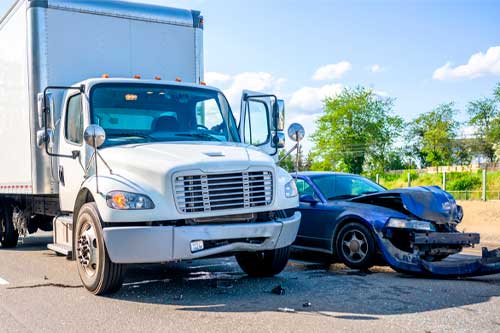 Most commercial trucks on U.S. highways are governed by strict safety rules created and enforced by the Federal Motor Carrier Safety Administration (FMCSA). These regulations set minimum standards for:
- How long truck drivers can be on the road
- How and when trucks must be inspected and maintained
- Driver qualifications, medical fitness, and training
- How cargo must be loaded and secured
In Texas, the Department of Public Safety’s Commercial Vehicle Enforcement division works to ensure that trucks traveling in and through the state comply with these rules, as well as state-specific requirements.
When a truck driver or trucking company breaks these regulations and causes a crash, those violations can be powerful evidence of negligence in your personal injury claim.
Key Trucking Rules That Often Impact Your Case
Not every regulation will matter in every crash, but some come up again and again in truck accident cases. When you search for “truck accident lawyers near me,” you need a team that understands how each of these rules can support your claim.
1. Hours-of-Service (HOS) and Driver Fatigue
Truck drivers are subject to strict limits on how long they can drive before taking breaks. Under FMCSA hours-of-service rules, most commercial drivers:
- May drive a maximum of 11 hours after 10 consecutive hours off duty
- Must complete all driving within a 14-hour “driving window”
- Must take a 30-minute break after 8 cumulative hours of driving
- Are limited by weekly on-duty maximums (e.g., 60/70 hours)
Today, most trucks use electronic logging devices (ELDs) to record driving time. If a driver falsified logs, skipped mandatory rest, or drove beyond the legal limits, those records can be used to show the driver, and sometimes the company, put profit over safety. Evidence of fatigue or HOS violations can strongly support your injury claim.
2. Vehicle Inspection, Maintenance, and Repair
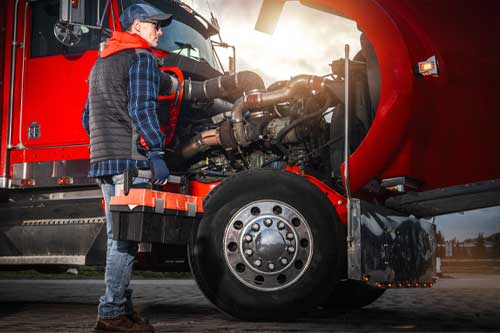
Commercial carriers must systematically inspect, maintain, and repair their trucks. Drivers are required to perform regular inspections and note any defects, and companies must keep detailed maintenance records.
When a crash is caused by:
- Worn-out brakes
- Bald or underinflated tires
- Faulty lights
- Steering problems
Maintenance and inspection records can reveal whether the problem was known, or should have been discovered, before the crash. If the trucking company ignored obvious safety issues, that pattern of neglect can significantly strengthen your case.
3. Driver Qualifications and Training
FMCSA regulations also control who is allowed to drive a commercial truck and under what conditions. These rules require:
- A valid commercial driver’s license (CDL)
- Medical certification that the driver is fit to operate a truck
- Compliance with drug and alcohol testing requirements
- Additional scrutiny and monitoring of new trucking companies entering the industry
If the driver who hit you had a history of safety violations, failed drug tests, or lacked proper training, a skilled truck accident attorney can use those facts to show that the company was careless in hiring, supervising, or keeping that driver on the road.
4. Cargo Loading and Securement
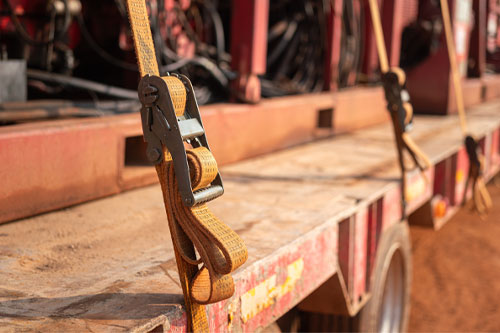
Improperly loaded or unsecured cargo can make a truck unstable, cause rollovers, or send debris flying onto the roadway. Federal rules spell out how loads must be distributed, secured, and checked during the trip.
If evidence shows overloaded trailers, shifting cargo, or unsecured freight, it may open the door to claims not only against the driver and carrier, but also against cargo loaders or third-party logistics companies.
How Violations Help Prove Negligence and Maximize Your Settlement
 In a personal injury claim, you must show the other party was negligent, that they failed to act with reasonable care, and that this failure caused your injuries. Federal trucking regulations help define what “reasonable care” looks like for truckers and carriers.
When a driver or company violates a specific safety rule and that violation contributes to your crash, it can make it easier to prove negligence. In some situations, this is treated as “negligence per se,” meaning the violation itself is strong evidence that they failed to meet the required legal standard of care.
An expert injury, car, and truck accident lawyer knows the FMCSA rules:
- Identify which regulations apply to your crash
- Obtain logbooks, ELD data, inspection reports, and maintenance records
- Work with experts to reconstruct what happened
- Show how each violation put you and your family at risk
This approach not only helps prove fault, it can also support claims for more serious damages. Demonstrating serious or repeated safety violations may strengthen arguments for full compensation for medical bills, lost wages, pain and suffering, and long-term care needs.
Common Questions About Federal Regulations and Your Truck Accident
What if I don’t know whether any rules were broken?
Most people don’t, and you’re not expected to. That’s where experienced truck accident lawyers come in. At Palker Law, our team investigates crashes in McAllen and across the Rio Grande Valley by gathering records, working with experts, and comparing what happened to the federal and state rules that should have protected you.
Do trucking companies have to turn over their records?
Compelling evidence, like ELD data, inspection reports, and driver qualification files, is in the trucking company’s hands. They may not be eager to share it. A lawyer can send preservation letters, demand production of records, and, when necessary, ask the court to compel the carrier to turn over what the law requires.
Can I still recover if I may have been partly at fault?
Even if you think you might share some responsibility, you should not assume you have no claim. The way fault is divided, especially when federal safety rules are involved, can be complicated. Talking with the experts at Palker Law, who understand both Texas law and federal trucking regulations, is the best way to understand your options.
Why Choosing the Right “Truck Accident Lawyers Near Me” Matters
Truck accident cases are very different from typical car wrecks. The companies on the other side have teams of adjusters and defense lawyers who know the FMCSA rulebook inside and out. You deserve a legal team that speaks the same language and is ready to hold them accountable.
Palker Law focuses on helping crash victims in South Texas build strong, regulation-based cases against negligent drivers and carriers, whether your collision involved an 18-wheeler, a delivery truck, or another commercial vehicle. Our understanding of how federal rules interact with Texas enforcement efforts, including those by DPS Commercial Vehicle Enforcement, allows us to pursue the evidence that truly matters.
Talk to Palker Law About Your Truck Accident
If you or a loved one has been injured in a truck accident, you don’t have to figure out federal trucking regulations on your own. When you search for “truck accident lawyers near me,” look for a firm that understands FMCSA rules, knows how to uncover violations, and is committed to telling your story clearly and powerfully.
Palker Law is ready to answer your questions, explain how federal trucking laws may apply to your case, and guide you through every step of this RGV claim process. To discuss your situation and get accurate legal guidance tailored to your circumstances, contact Palker Law today.